Development History
BA-I
The development of a three-axle armor cars in the USSR began in the early '30s. The design efforts were mainly based around the chassis of American Ford Timken trucks, which were first delivered to the Soviet Union in 1931. Production of this automobile began at the end of the year at the «Gudok Oktyabrya» factory in Kanavin, adjacent to Nizhnij Novgorod. In the fall of the same year an armored body was applied to the chassis at the Moscow Rembaza #2. Approximately 20 of these armored cars were built under the designation BA-27M. Several dozen D-13 armored cars, designed by N. I. Dyrenkov and based on the same chassis were built concurrently at the Izhorskij Factory.
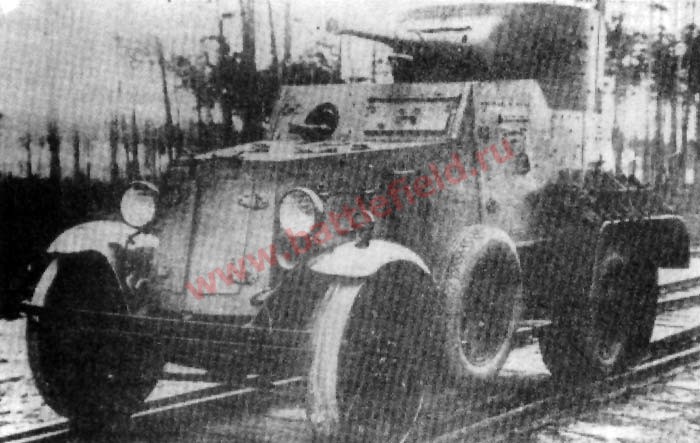
In 1932, engineer P. N. Syachentov, known for his work in the field of artillery, drafted up a general-purpose amphibious armored car BAD-2 (designation acronym stands for «armored car-rail trolley»), which could travel on railroad tracks. Only one BAD-2 was built. However, not a single one of the mentioned machines possessed satisfactory technical specification desired by the military. The army needed a medium gun-equipped modifiable armored car.
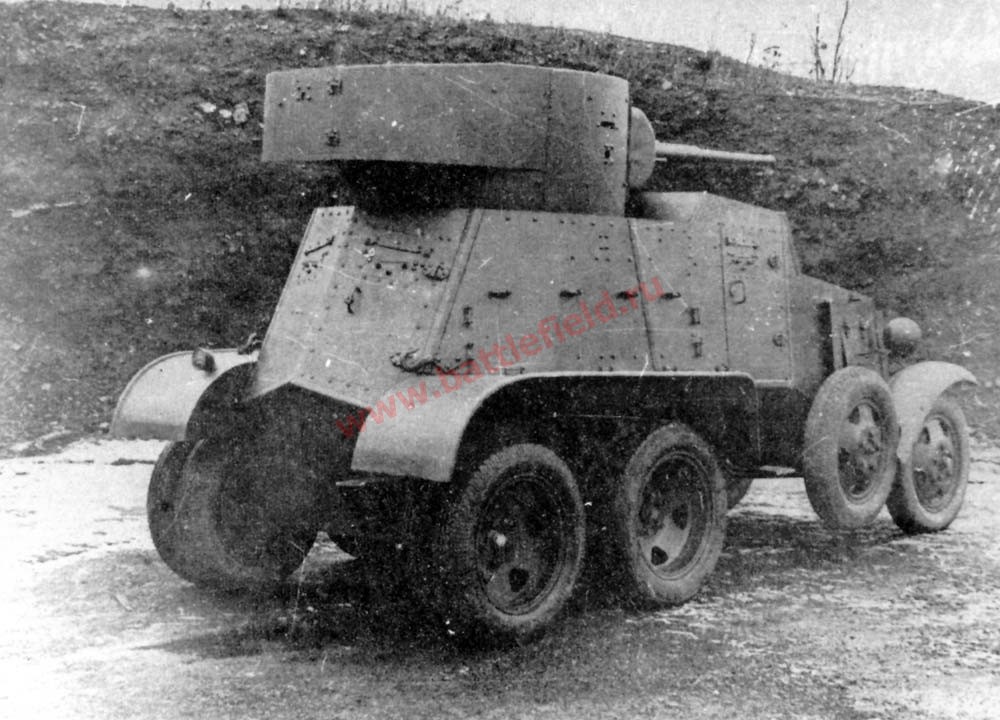
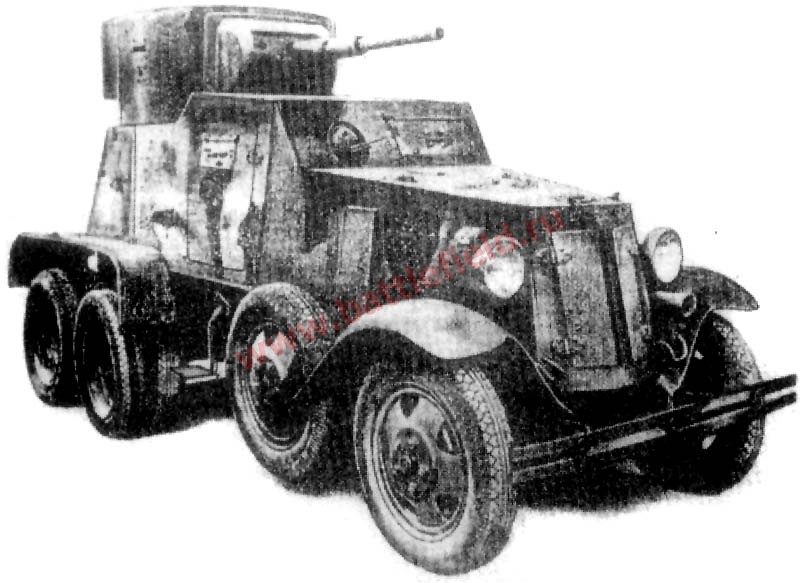
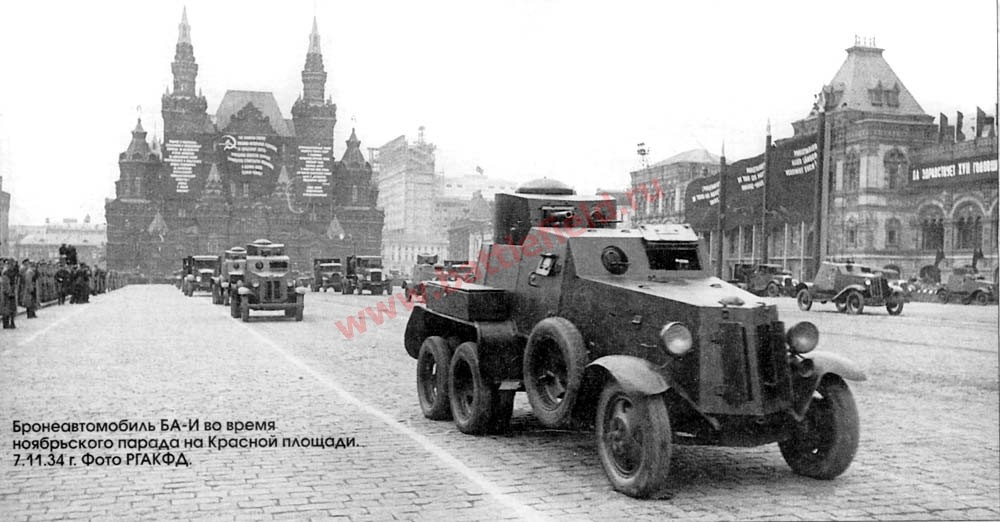
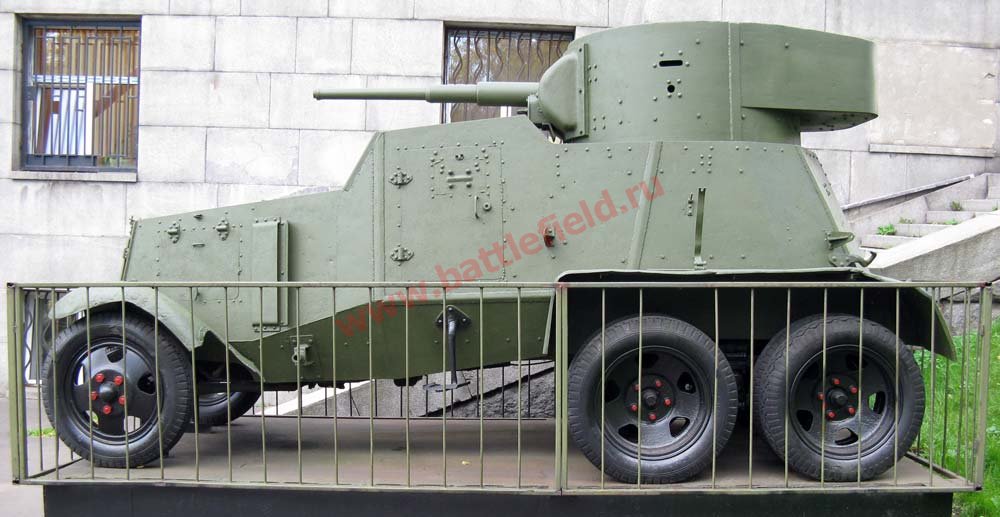
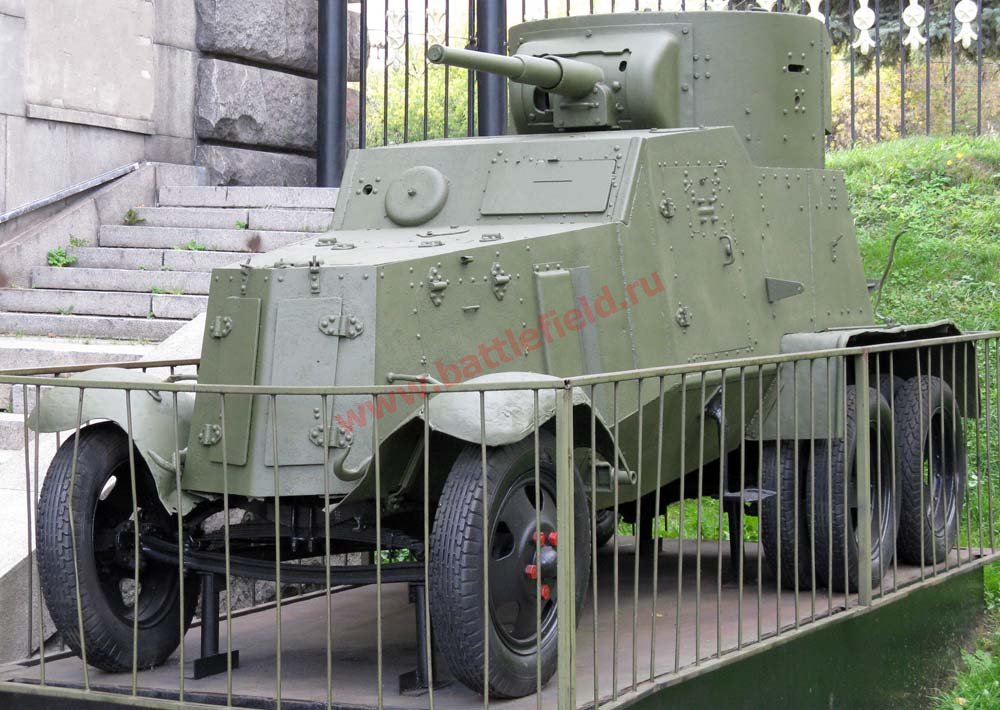
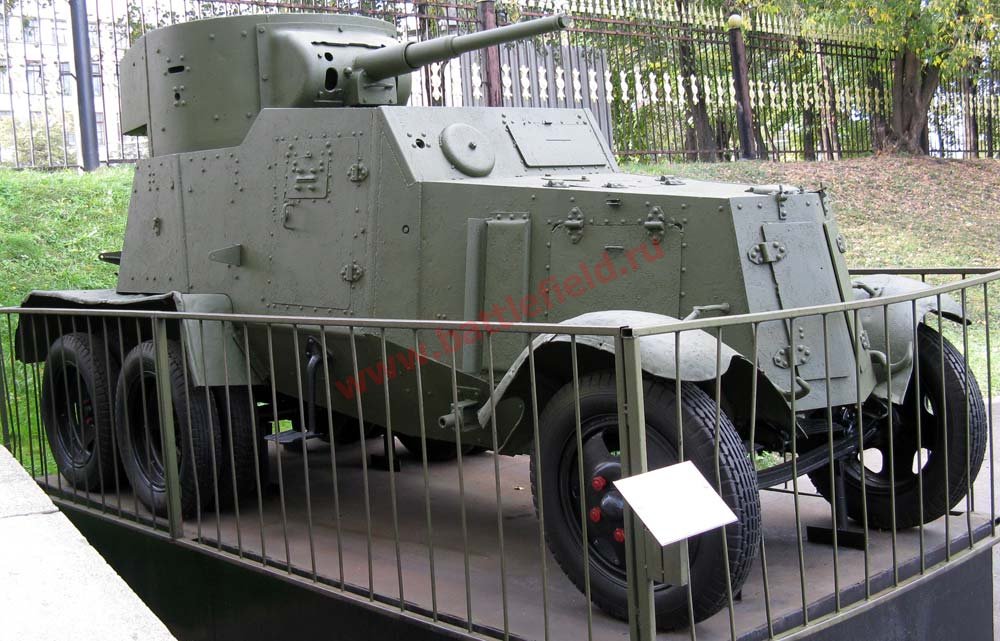
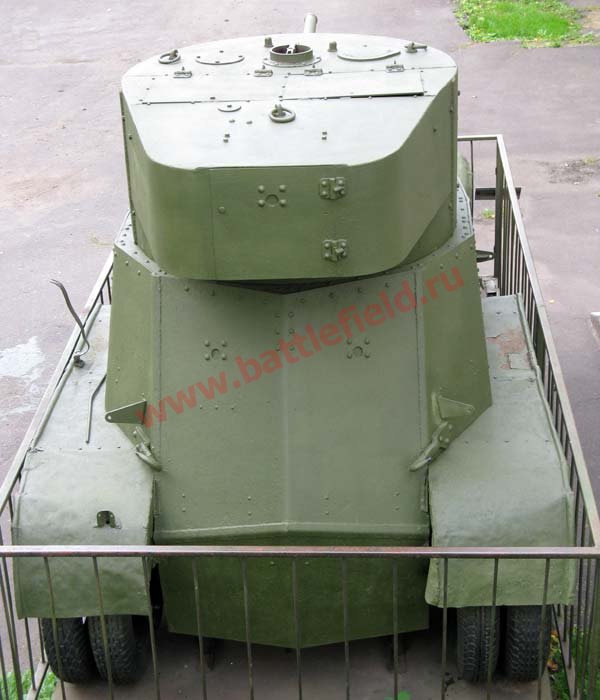
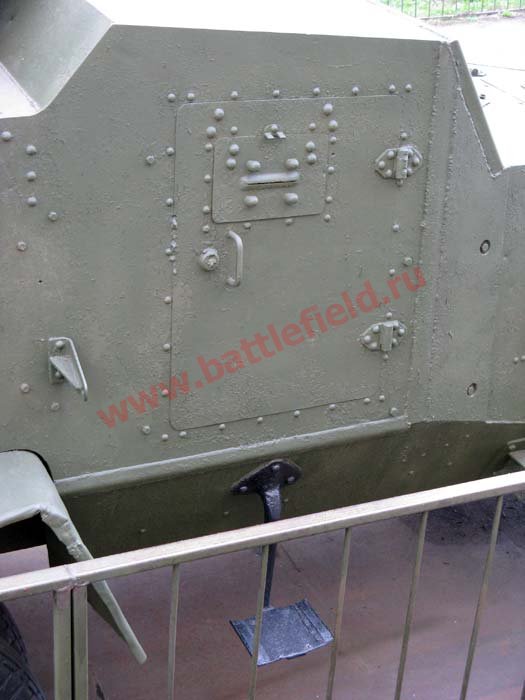
In 1932, the BA-I armored car was designed at the Izhorskij factory under the direction of A. D. Kuz'min. The «I» in the designation stands for Izhorskij; in some publications the designation is written as simply BAI. During its creation designers employed the same Ford-Timken chassis. The complete hull of the vehicle was welded together — an engineering feat by the standards of that time. Doors for the crew were located on the sides and rear of the hull.
The cylindrical welded turret contained a standard 37-mm tank gun (supplied with 34 rounds) and a separately-mounted ball mount DT machine-gun. A second DT machine-gun was located in the frontal hull plate to the right of the driver. Due to the step-like form of the roof (the under-turret plate was significantly lower than the roof of the driver's compartment) the overall height of the vehicle was decreased.
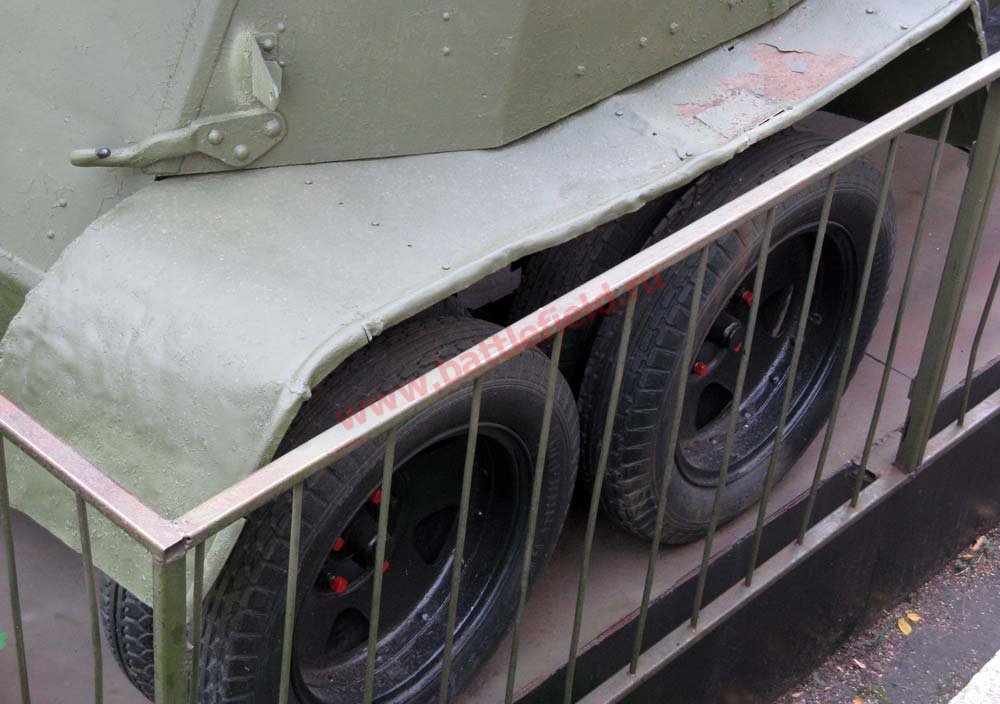
Another innovation in the BA-I's construction were freely rotating spare wheels (an idea borrowed from the D-13) suspended at the sides of the hull. The spares prevented the car from bottoming out and assisted in the traversal of trenches and ditches. Later on, this design element was transferred from one BA to another, all the way to the BA-10. The BA-I armored car was built in small numbers in 1932–1934 and served in the Red Army.
BA-3
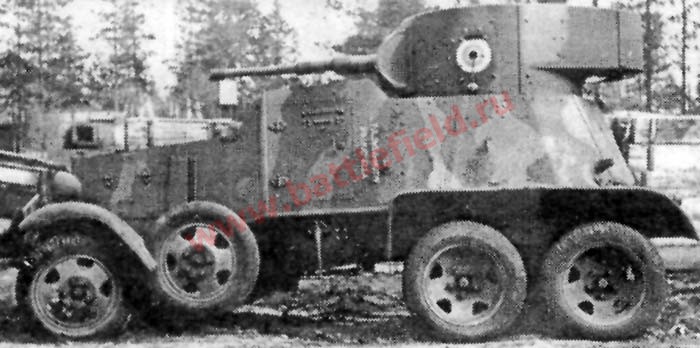
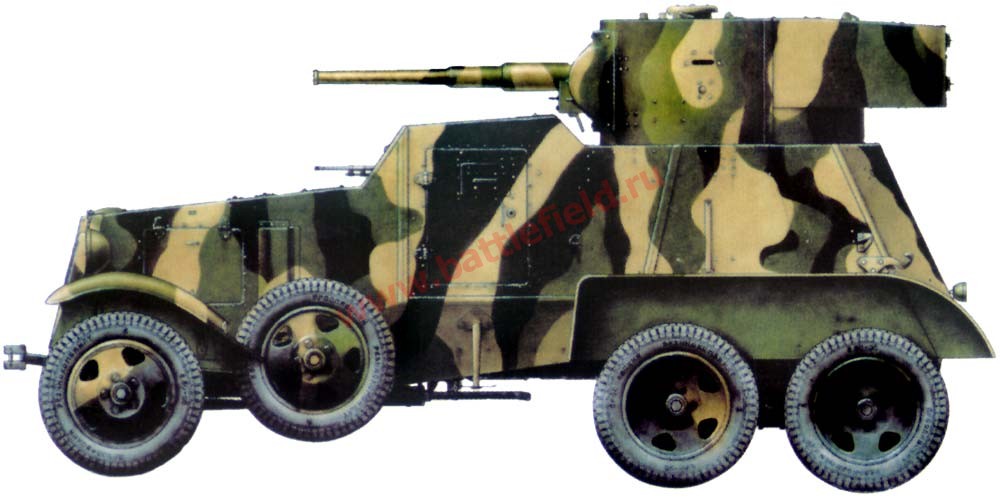
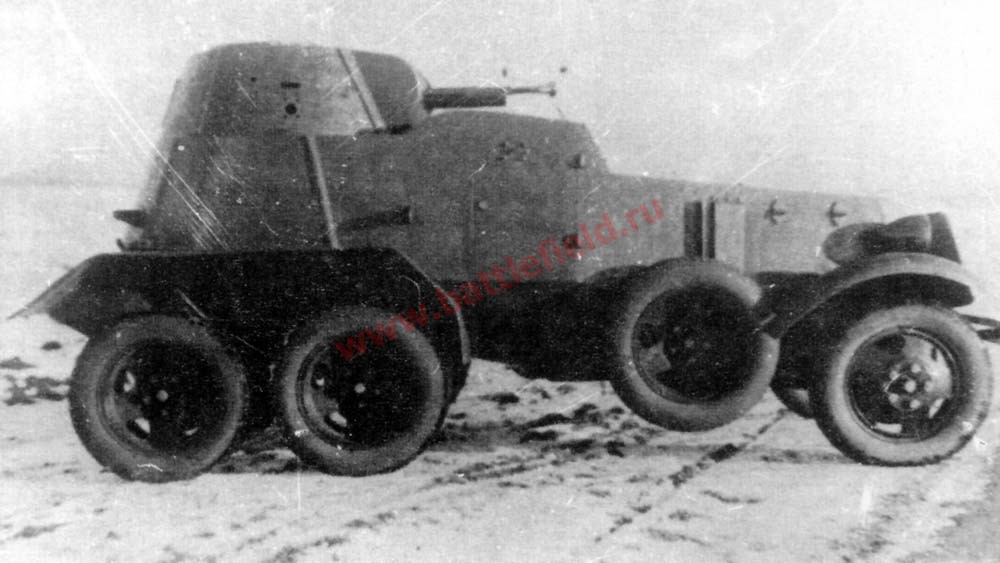
In 1934 the Izhorskij factory produced an improved model — the BA-3. The hull of the BA-I underwent only insignificant changes: the rear section of the hull was extended by 50mm, the engine compartment acquired air-escape windows, the running board was shortened, and the rear fenders now accommodated fastenings for all-terrain tracked chains. Installation of the body onto the Ford Timken chassis was accomplished with the help of 10 brackets, which were bolted to the side members through rubber gaskets.
The main innovation in the new vehicle was the turret and its armament. BA-3 received the turret from the T-26 Light tank, which had thinner 8mm armor with a paired weapons mount — the 45 mm 20K gun model 1932/38 (supplied with 60 rounds) and the DT machine-gun. The ammunition was located partially in the turret and partially in the hull of the armored car. In the recess of the turret there were two honeycomb racks with space for 40 shells, along the hull wall there were housings for 12 more (6 per side) and for 8 more along the walls in the fighting compartment (4 per side).
The four racks in the turret and the hull accommodated 53 magazines for machine-guns. For the first time in Soviet armored car industry, in an attempt to improve mobility, the rear wheels of the BA-3 were outfitted with all-terrain tracks, known under the foreign name «Overall». Each track weighed 71 kg and was comprised of 25 80×35 mm links. The length of one track was 4500 mm, step size — 180 mm. Installation of the tracks by the whole crew took 10–15 min.
In June 1943, the BA-3 armored car fitted with a non-armored hull underwent testing at the NIIBT proving grounds of the UMM RKKA at Kubinka, not far from Moscow. During testing the 5.82-tonn vehicle achieved a speed of 70 km/h on a paved road (the number seems a bit high, but that's how it was reported), while the speed on a dry dirt road did not exceed 35 km/h. During the runs the engine overheated and it was recommended that the cooling system be improved.
The front suspension had to be strengthened as well. Otherwise, no major problems were revealed, and the only recommendations were for minor revisions of the internal instrumentation layout. As stated in the concluding statement of the review committee: «the armored car displayed good characteristics necessary for a battle-worthy vehicle and can be proposed to be accepted for service to RKKA.»
The production of the BA-3 was organized at the Izhorskij and the Vyksunskij factories, which in the years 1934–35 produced 180 (168 according to other sources) armored cars of this type.
BA-6
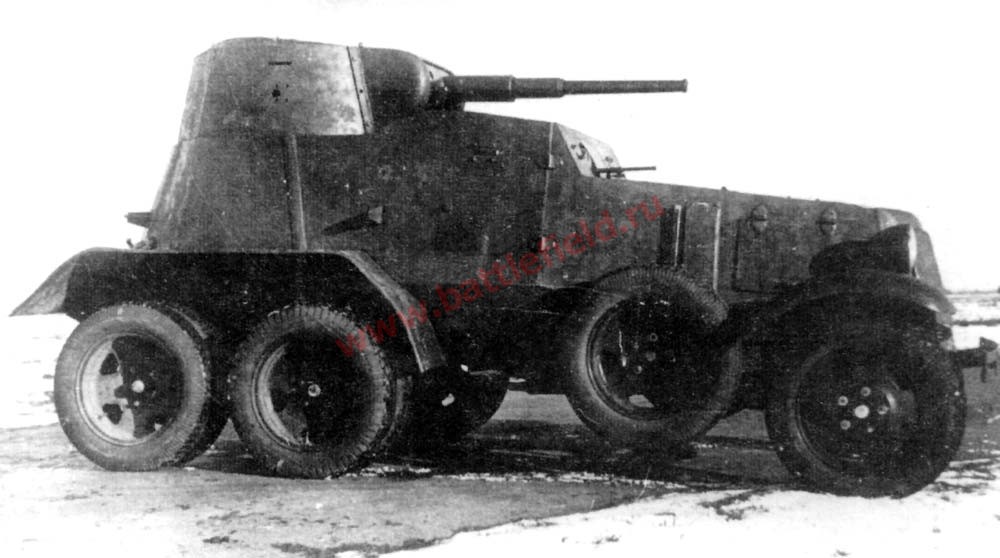
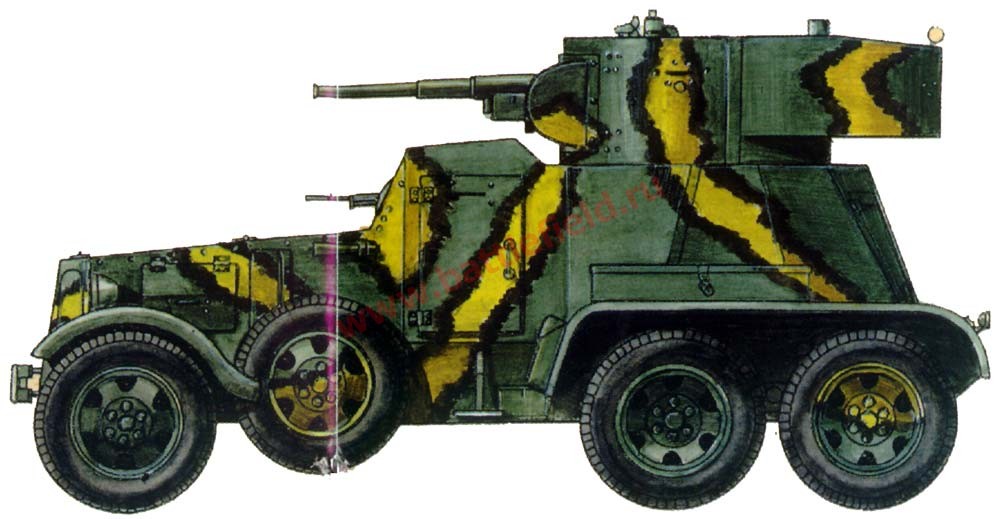
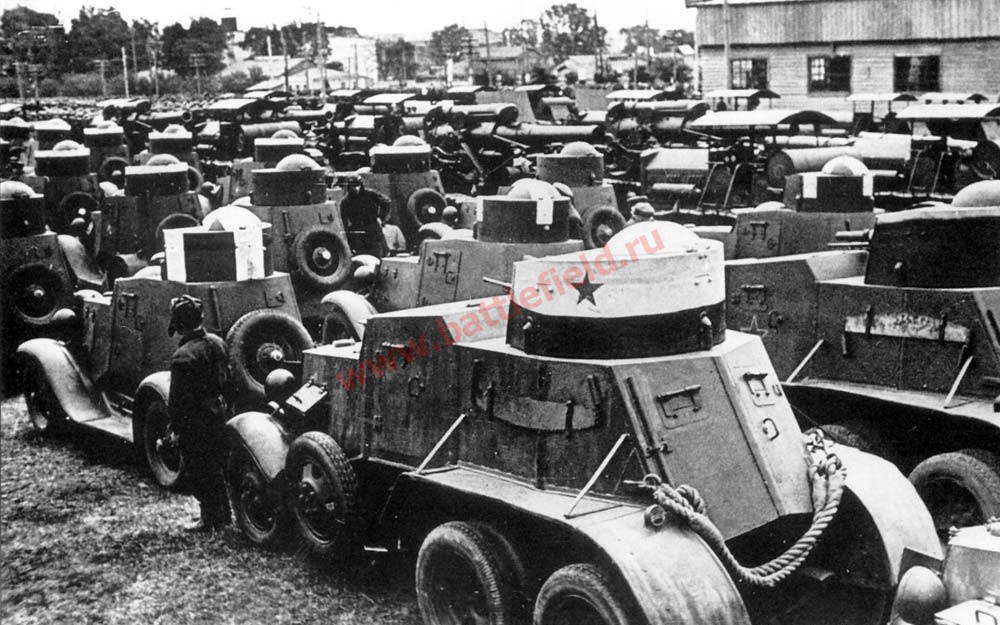
By 1935, the GAZ factory mastered the production of the domestic three-axle automobile GAZ-AAA. The Izhorskij factory quickly developed a new BA-6 armored car based on this automobile. The hull, turret, and the location of ammunition, joints and equipment were essentially unchanged from those of its predecessor.
The only visual distinction that identified the new car was the absence of a rear door, rear observation windows and a running board in the rear part of the hull. Also, the rear track increased to 1600 mm (for BA-3 it was 1585 mm); the distance between the front axle and the center of the suspension decreased to 3200 mm (vs. 3220 of BA-3); the distance between the rear axles was shorted as well, from 1016 mm (for the BA-3) to 940 mm. The new armored car was the first to use bullet-resistant tires GK (porous inner tube), filled with porous rubber.
Due to stricter weight control the mass of the car decreased to 5.12 tons without compromising any of the technical parameters. Between 1936 and 1938 the Izhorskij factory produced 386 BA-6 armored cars.
BA-6ZhD
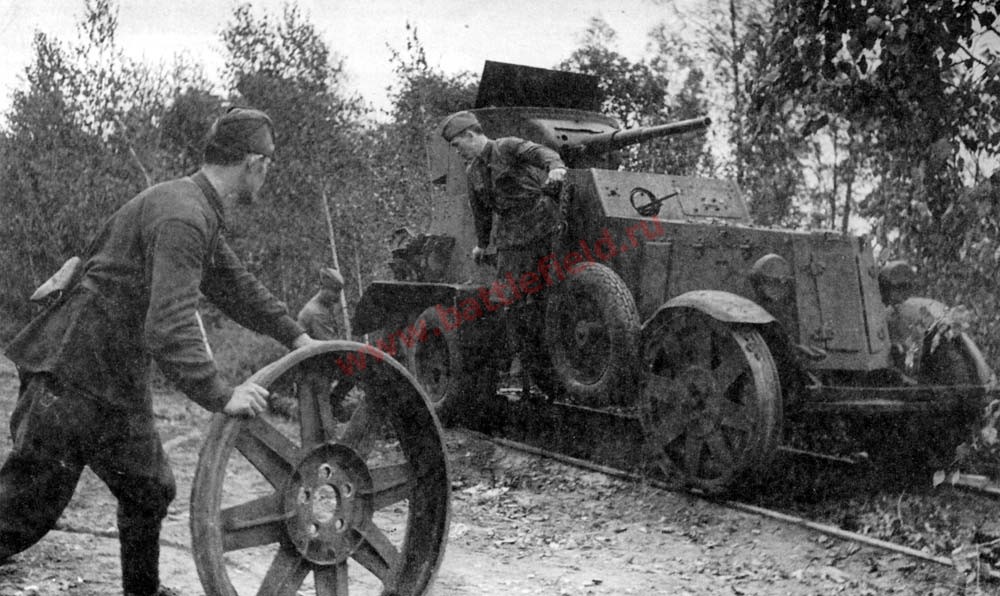
Another version of the vehicle — BA-6ZhD («ZhD» stands for «railroad-going») was produced in limited numbers. When changing from regular to railroad drive setup, special railroad wheels were installed right over common (pneumatic) tyres. However, the outer wheels still had to be removed from the rear axles to match the width of the railroad tracks.
The steering wheel in this case was locked in the center position. At 5,9 tons the BA-6ZhD could reach 55 km/h on rails.
BA-6M and BA-9 Armored Cars
In 1936, an experimental BA-6M version of the armored car was constructed, which had a truncated cone turret, thicker 10mm armor, a 71-TK-1 radio station and a 50-horsepower GAZ-M engine. The BA-6M weighed in at 4800 kg.
A lighter version of the BA-6M, the BA-9, was built concurrently with the standard model. The BA-9 was armed with a 12.7-mm DK machine-gun instead of a larger gun. In accordance with instructions issued by the people's commissar K. E. Voroshilov in 1937 the Izhorskij factory had to manufacture 100 BA-9's for the army's cavalry units. However, this task could not be accomplished due to the shortage of DK machine-guns.
Combat employment
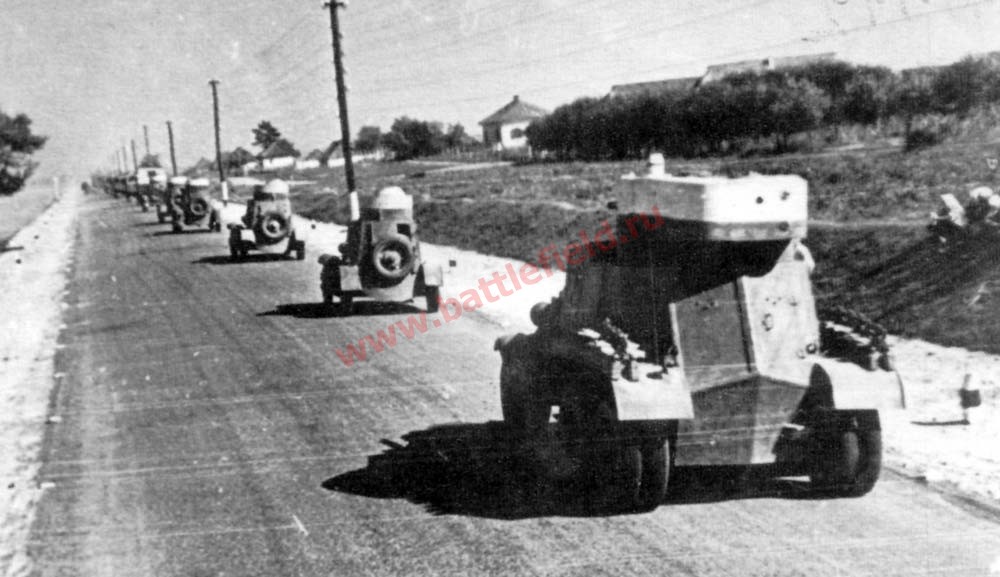
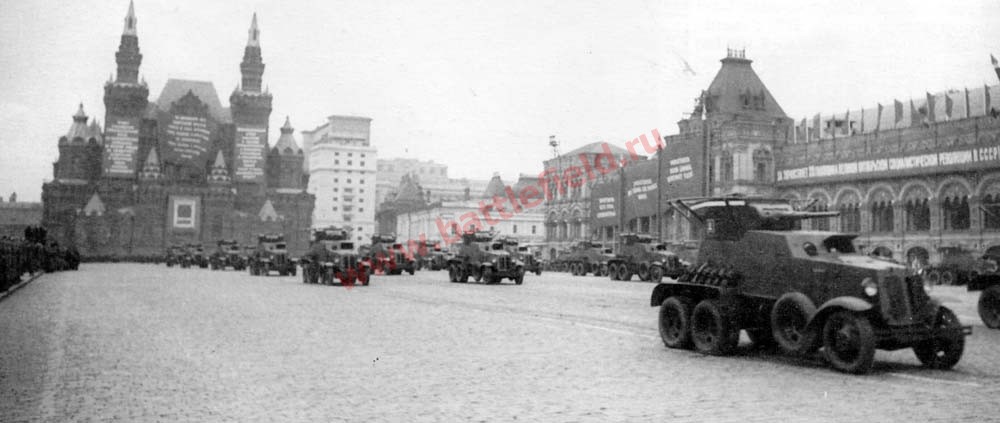
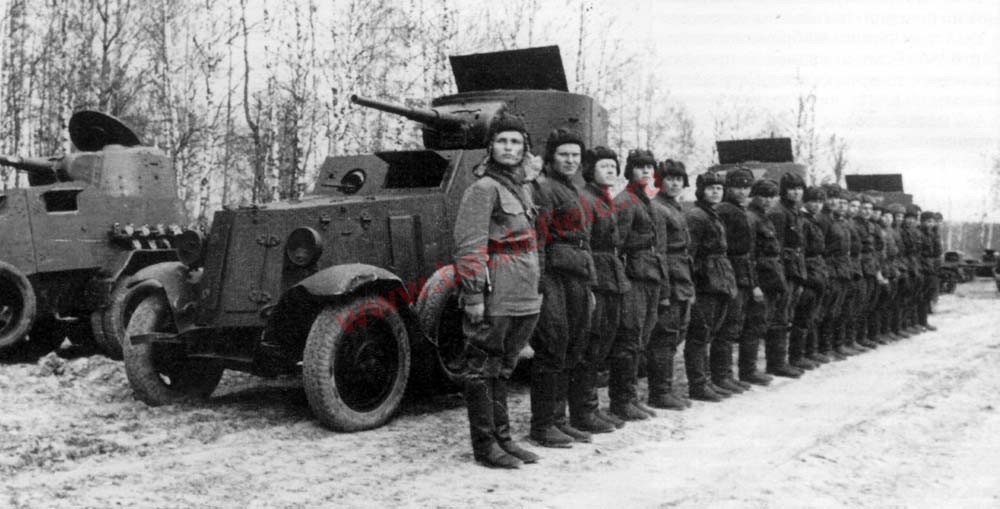
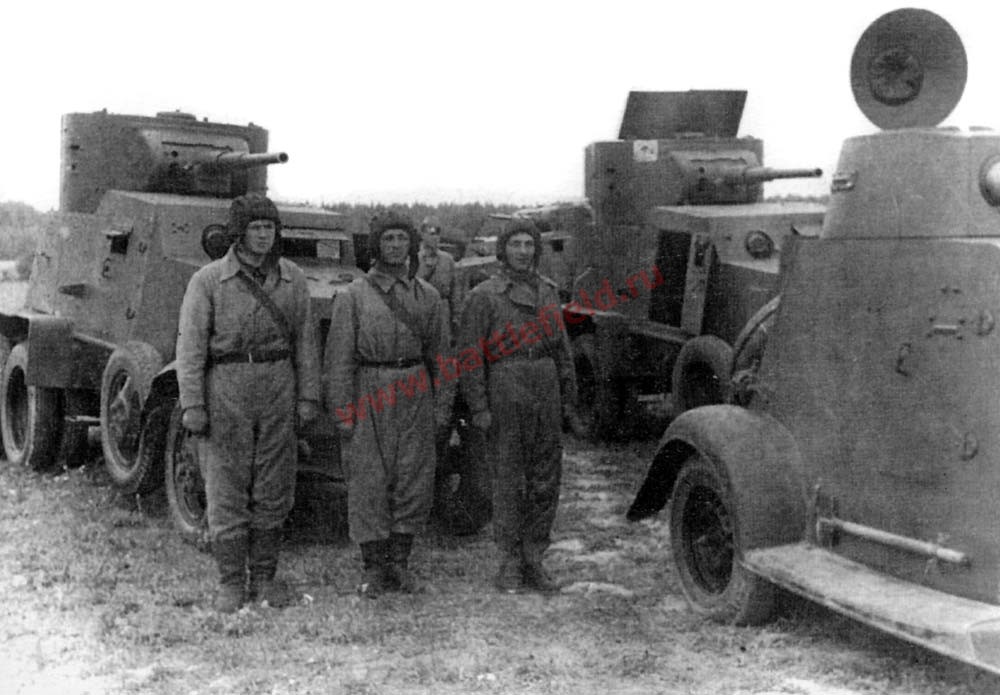
BA-3 and BA-6 armored cars were supplied to arm reconnaissance troops of tank, cavalry and infantry units of the Red Army. In 1937, a motorised armored regiment was formed in the Transbaikal Military District, which, shortly afterwards, was expanded into a brigade.
It included a battalion of medium armored cars, a reconnaissance battalion (medium and light armored cars) and an infantry machine gunners' battalion. In total there were 80 medium and 30 light armored cars in the brigade. Three such brigades — 7th, 8th, and 9th participated in fighting with the Japanese army at the Khalhin-Gol River.
Virtually at the same time as the armored cars were being supplied to the Red Army, they were also exported to other countries. Foreign sources tell us about the sale of 60 BA-6 armored cars to Turkey.
However, if the date of the sale is correct, then the vehicles were most likely BA-3's, since the production of the BA-6 did not begin until one year later. This assumption seems valid from an operational point of view as well. It would be easier for the Turks to perform service on the American Ford Timken chassis rather than on the Soviet GAZ-AAA. However, this is my guessing only...
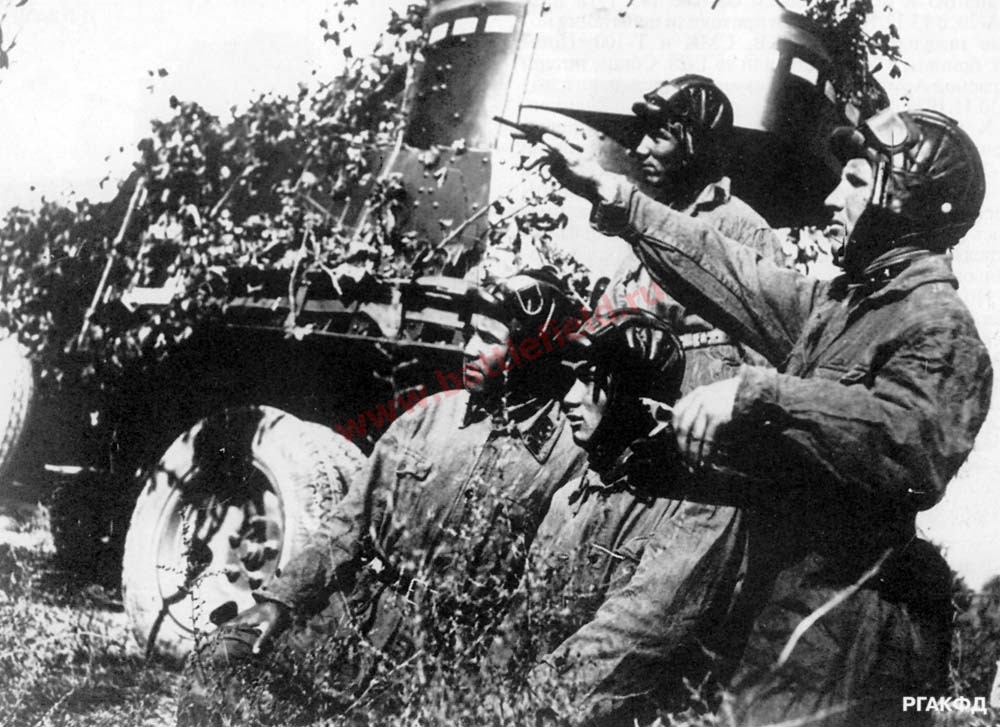
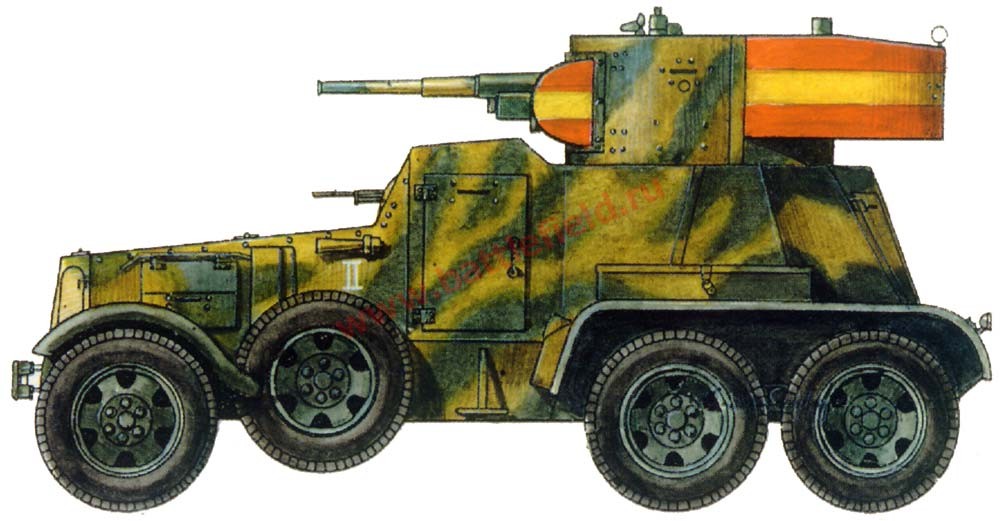
Starting in December 1936 and lasting up until the withdrawal of Soviet military assistance in 1938 Spain took delivery of 7 BA-I's and 80 BA-6's. One of the first units of the Republican army that received the machines was the 1st Armored Brigade under the command of D. G. Pavlov. This brigade took part in the heavy battles near Madrid in 1937. The crews of the tanks and armored cars were made up of Soviet and Spanish soldiers. During fighting near Madrid, the BA-6's took out several enemy tanks.
By the summer of 1937, an armored car brigade was formed in the Spanish Republican army. In December 1937 up to 30 BA-6's with Spanish crews participated in an advance on the Teruels prominence — the last major and successful Republican operation. After the end of the Civil War, several BA-6's remained in the Spanish army until the early '50s.
BA-6's also served in the Mongolian Revolutionary People's Army. The 6th and 8th armored battalions of the Mongolian cavalry divisions equipped with these vehicles took part in an armed conflict at the Khalhin-Gol River during the spring and summer of 1939.
The foreign press cites instances of BA-6 deliveries to Afghanistan and China. It is hard to verify this information with respect to Afghanistan. As to China, such deliveries seem unlikely, because in the information released by the Soviet press concerning the delivery of military equipment and armaments to China between 1936 and 1939, the BA-6 armored cars (or any other armored cars) are not mentioned.
Thus, 150 BA-I, BA-3, and BA-6 armored cars were exported between 1935 and 1939. Most of the others performed service in the Red Army, primarily on the Far East. Nevertheless, a few BA-3's and BA-6's took part in a Polish campaign (1939), during the Winter War, as well as in the Great Patriotic War (they could be found in the military forces at least as late as the middle of 1942).
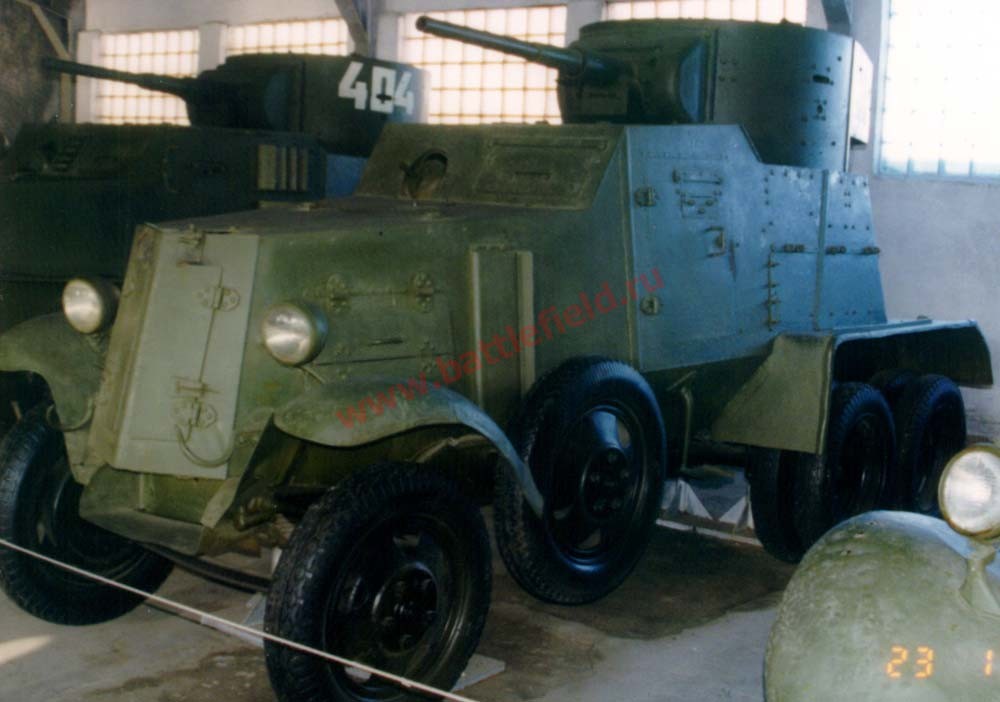
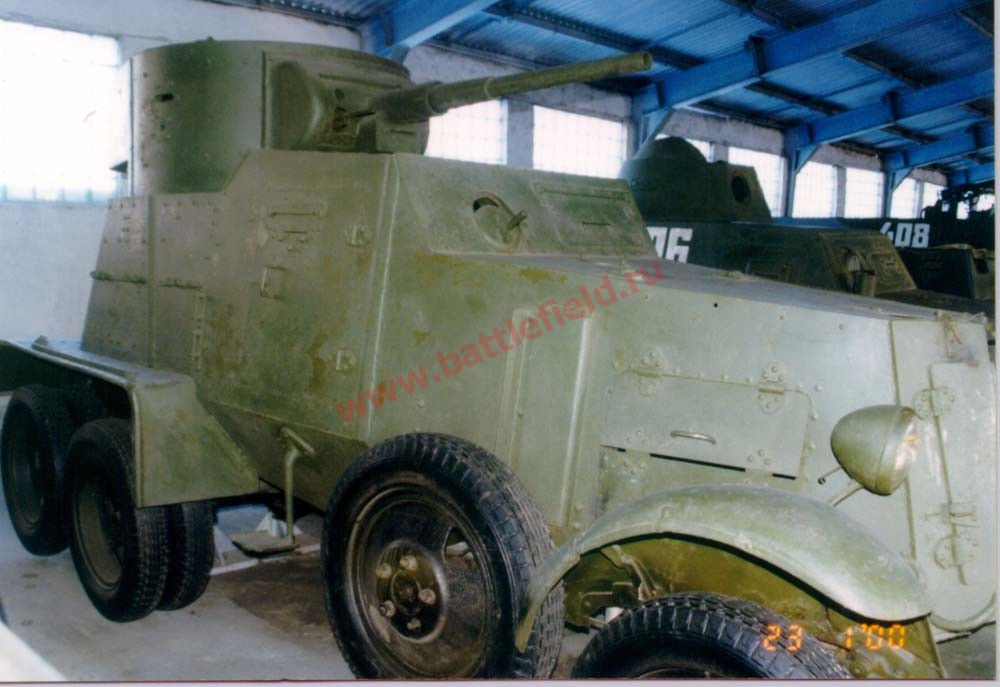
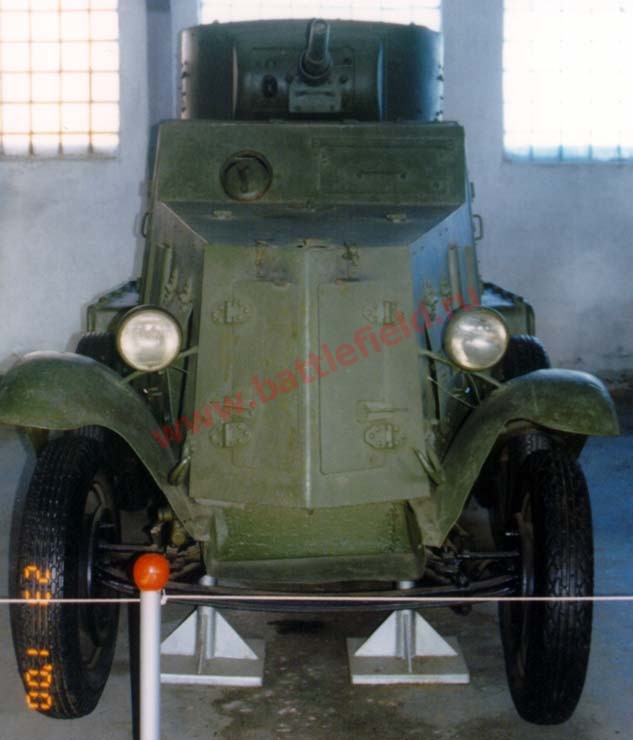
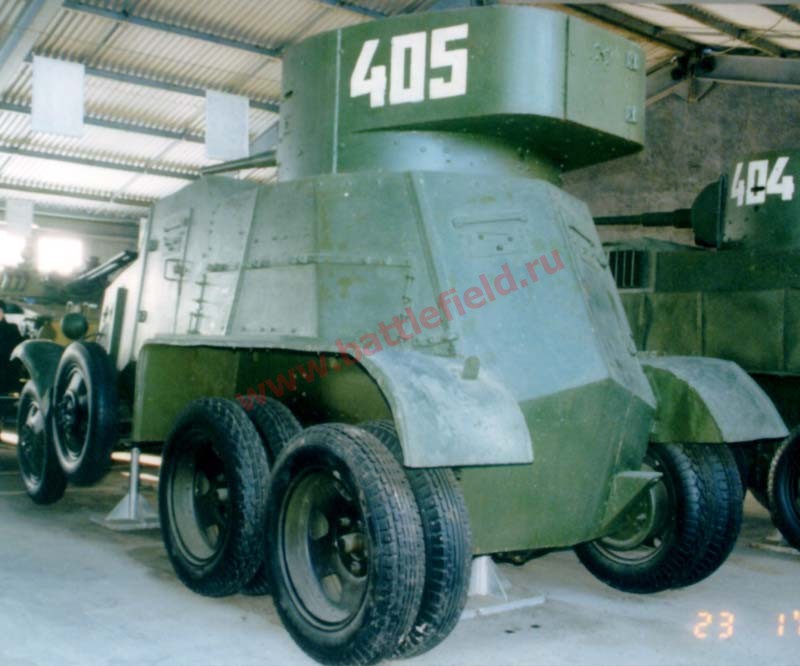
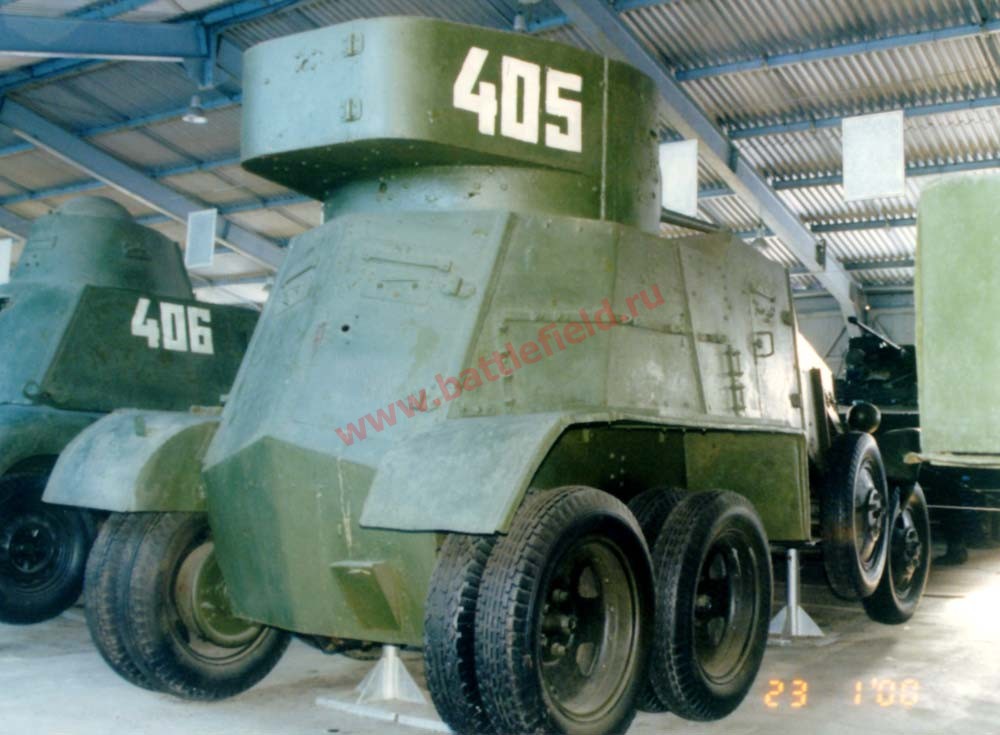
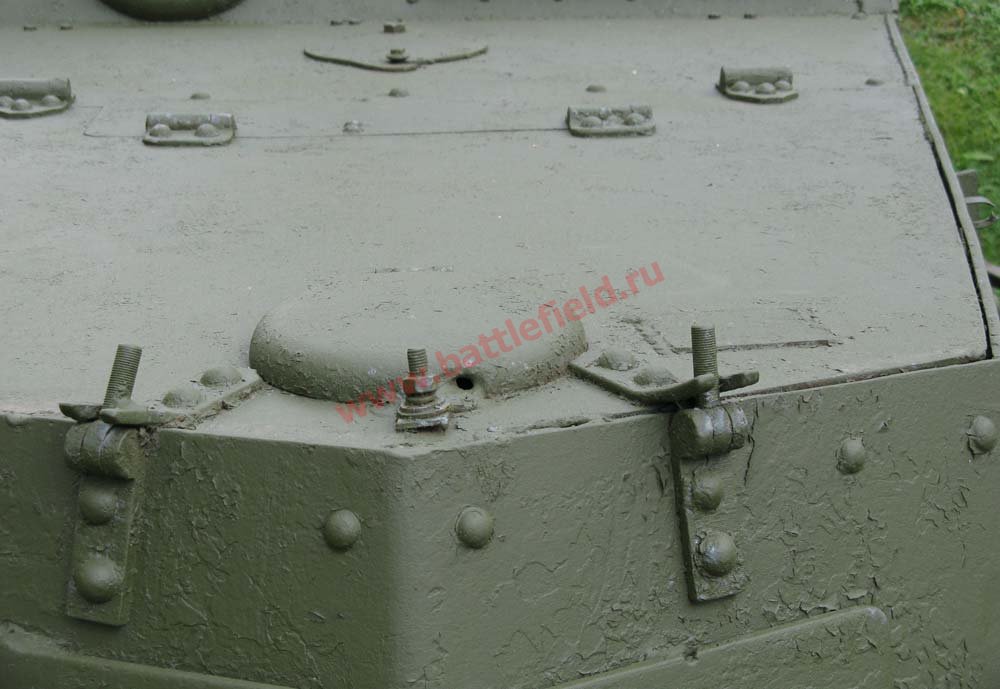
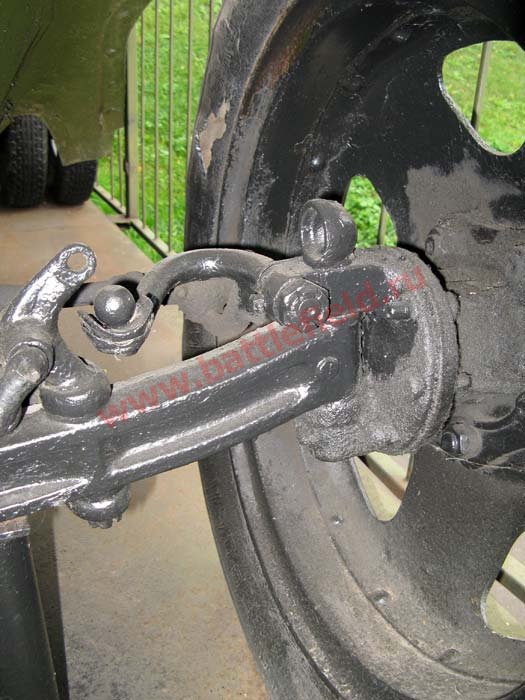
The Finish army, which captured some of these vehicles in 1939 and 1941, exploited them much longer. As of June 1, 1944, the Finns had possession of one BA-3 (which served until the end of 1944) and 10 BA-6's (which were in operation until the end of 1956.) Currently an example of a BA-3 armored car (#5633) is kept in the tank museum in Kubinka; and a BA-6 (#4382) can be seen on display at the CMVS in Moscow (see photos below the article).
In conclusion it should be noted that at the time of creation and even in the first stages of WW2, these armored cars were the most heavily armed in the world. Their British and American counterparts acquired 37–40 mm guns only in 1942. The first adequately armed German armored car became the widely known «Puma» (1944).
Unfortunately, massive armament was perhaps the only and most important merit of the medium Soviet armored cars of the '30s. Battle experience revealed the practical impossibility of their deployment on the front lines due to poor off-road capability.
The list of major shortcomings included weak armor and a lack of a driving controls post in the rear. The most advanced representative of the large series of Soviet gunned armored cars — the BA-10, also exhibited these shortcomings. Incidentally, all foreign armored cars of those years built on the chassis of commercial vehicles suffered from the same «illnesses.» With the arrival of all-wheel drive wheeled armored cars they became completely obsolete.